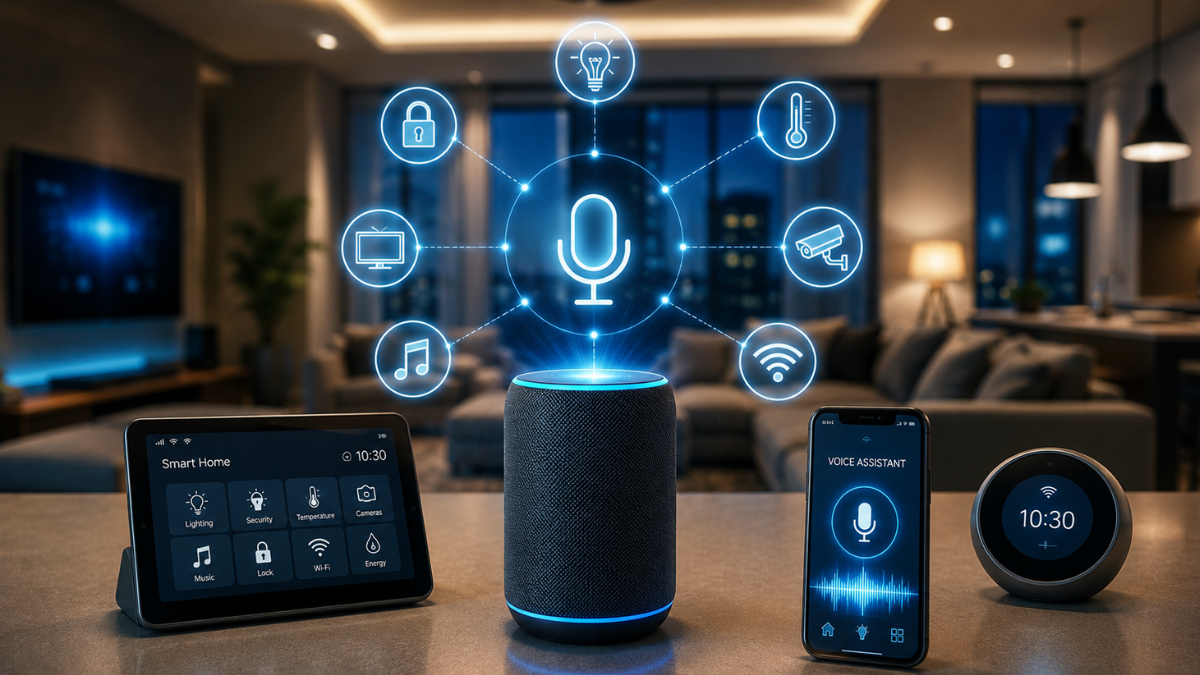
AI voice assistants are transforming daily life by helping people manage tasks, control smart devices, access information instantly, and improve productivity through natural voice interactions.
Modern AI-powered assistants can understand context, automate routines, and help users manage tasks more efficiently across homes and workplaces.
Just a decade ago, talking to a machine felt like science fiction. Today, millions of people use AI voice assistants every day to play music, control lights, check schedules, answer questions, and manage smart homes.
The rapid growth of voice assistant technology reflects a broader shift toward more natural human-computer interaction. According to data published by Statista, the global number of digital voice assistants continues to grow as smart devices become increasingly integrated into everyday life.
What makes modern AI voice assistants particularly interesting is their ability to understand context, learn user preferences, and perform increasingly complex tasks. From setting reminders to managing entire home automation systems, these intelligent assistants are becoming an essential part of daily routines.
Understanding how AI voice assistants work—and how they are changing everyday life—helps consumers make better decisions about adopting these technologies.
What Are AI Voice Assistants?
AI voice assistants are software systems powered by artificial intelligence that interact with users through spoken language, allowing them to perform tasks, answer questions, and control connected devices.
Unlike traditional voice recognition systems, modern AI assistants combine several technologies:
- Speech recognition
- Natural language processing
- Machine learning
- Conversational AI
- Cloud computing
These technologies enable assistants to understand commands more naturally and provide increasingly accurate responses.
Popular examples include:
- Amazon Alexa
- Google Assistant
- Apple Siri
- Microsoft Copilot Voice
How AI Voice Assistants Work
At a basic level, AI voice assistants follow a multi-step process.
Step 1: Voice Recognition
The assistant captures spoken words through microphones.
Advanced voice recognition technology converts speech into text for analysis.
Step 2: Natural Language Understanding
The AI analyzes:
- Meaning
- Context
- Intent
- User preferences
This process allows the assistant to understand requests beyond simple keywords.
Step 3: Task Execution
Once the request is understood, the assistant performs an action such as:
- Playing music
- Setting alarms
- Sending messages
- Controlling smart devices
Step 4: Continuous Learning
Machine learning enables AI powered assistants to improve over time by recognizing patterns and user habits.
Everyday Tasks AI Voice Assistants Simplify
One reason voice assistant devices have become popular is their ability to simplify routine activities.
Managing Schedules
Users frequently rely on digital assistants to:
- Create reminders
- Schedule appointments
- Manage calendars
- Set recurring tasks
Quick Information Access
Instead of searching manually, users can ask:
- Weather forecasts
- Sports scores
- Traffic updates
- Definitions
- General knowledge questions
Hands-Free Communication
Voice assistants make it easier to:
- Send messages
- Make calls
- Join meetings
- Read notifications
This functionality is especially valuable while driving or multitasking.
AI voice assistants save time by enabling hands-free access to information, communication, scheduling, and smart device control through natural voice commands.
AI Voice Assistants and Smart Homes
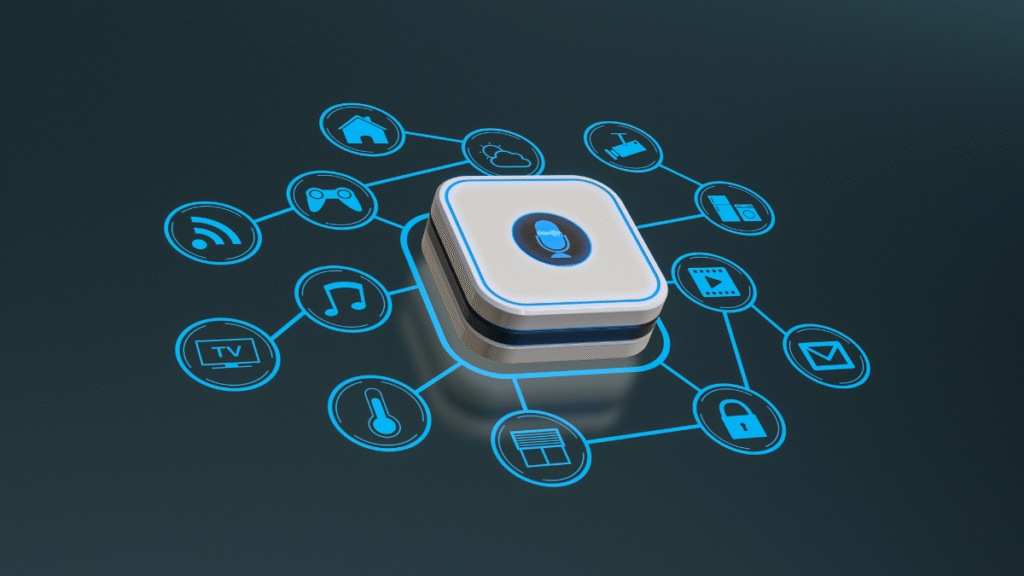
The growth of smart home assistant technology has significantly expanded the usefulness of voice assistants. Learn more about how AI devices are transforming connected homes in our guide to AI gadgets for smart homes.
Device Control
Modern assistants can manage:
- Smart lights
- Thermostats
- Security cameras
- Smart locks
- Smart plugs
Home Automation
Users can create routines such as:
- Turn on lights.
- Adjust temperature.
- Start coffee makers.
- Read daily schedules.
All with a single voice command.
Energy Efficiency
According to information from the U.S. Department of Energy, smart home technologies can contribute to improved energy management when properly configured.
Voice activated technology makes these systems easier to use and monitor.
Voice assistants are becoming one of the most practical examples of how artificial intelligence improves connected living spaces. Explore more technologies in our guide to AI gadgets for smart homes.
AI Voice Assistants vs Traditional Virtual Assistants
| Feature | AI Voice Assistants | Traditional Virtual Assistants |
|---|---|---|
| Voice Understanding | Advanced | Basic |
| Context Awareness | High | Limited |
| Learning Capability | Continuous | Minimal |
| Smart Home Integration | Extensive | Limited |
| Conversational Ability | Natural | Scripted |
Modern conversational AI systems provide a significantly more natural experience compared to earlier voice technologies.
How AI Voice Assistants Improve Productivity
Many professionals now use AI productivity tools to streamline daily work.
Task Management
Voice assistant technology helps users:
- Organize projects
- Track deadlines
- Create task lists
Meeting Assistance
Many AI assistants can:
- Schedule meetings
- Send reminders
- Summarize information
- Retrieve calendar details
Faster Information Retrieval
Instead of manually searching, users can obtain information instantly through voice commands.
This can save valuable time during busy workdays.
AI voice assistants improve productivity by automating repetitive tasks, managing schedules, retrieving information instantly, and integrating with workplace tools.
Privacy and Security Considerations
As AI assistants become more capable, privacy concerns have also increased.
Common Concerns
Users often worry about:
- Continuous listening
- Data collection
- Voice recordings
- Personal information storage
Security Improvements
Leading technology companies have introduced:
- Voice recognition profiles
- Data management controls
- Privacy dashboards
- Two-factor authentication
Research from Google AI Research highlights ongoing efforts to improve AI capabilities, safety, and privacy considerations.
Best Practices
Users should:
- Review privacy settings regularly
- Delete unnecessary recordings
- Enable account security features
- Keep devices updated
The Future of AI Voice Assistants
Several emerging trends are expected to shape the future of voice assistant technology.
More Natural Conversations
Future systems will better understand:
- Context
- Tone
- Emotional cues
- Complex requests
Better Personalization
AI assistants are becoming increasingly capable of adapting to individual preferences.
Greater Smart Home Integration with AI Voice Assistants
Voice assistant devices will likely manage more connected systems within homes, creating more seamless smart home experiences.
Multimodal AI Assistants
Future assistants may combine:
- Voice
- Visual recognition
- Text interaction
- Gesture control
This could create a more seamless user experience.
Challenges AI Voice Assistants Still Face
Despite rapid progress, several limitations remain.
Accent Recognition
Certain accents and dialects may still create challenges.
Complex Context
Some conversations remain difficult for AI systems to interpret correctly.
Internet Dependence
Many advanced features still rely heavily on internet connectivity.
However, ongoing improvements in edge computing are expected to reduce this dependency.
AI voice assistants are also part of a wider movement toward smarter communication technologies, including AI-powered translation tools. Learn more in our guide to AI translator devices.
Conclusion
AI voice assistants have evolved from simple voice command tools into advanced digital assistants capable of improving convenience, productivity, and home automation.
Whether controlling smart devices, managing schedules, retrieving information, or assisting with daily tasks, these systems are becoming increasingly integrated into modern life.
As artificial intelligence continues to advance, voice assistants will likely become more natural, personalized, and useful. For consumers interested in smart home technology, productivity tools, or hands-free convenience, AI voice assistants represent one of the most practical applications of artificial intelligence available today.
AI Voice Assistants FAQ
What are AI voice assistants?
AI voice assistants are software systems that use artificial intelligence, speech recognition, and natural language processing to understand spoken commands and perform tasks.
How do AI voice assistants work?
They convert speech into text, analyze the user’s intent, execute requested actions, and provide spoken responses using machine learning and conversational AI technologies.
Are AI voice assistants safe to use?
Most major voice assistants include privacy controls and security features. Users can further improve security by managing settings and enabling account protections.
Can AI voice assistants control smart homes?
Yes. Many voice assistants can manage smart lights, thermostats, cameras, locks, and other connected devices through voice commands.
Do AI voice assistants require internet access?
Many advanced features rely on internet connectivity, although some devices now support limited offline functionality.
Which industries benefit most from AI voice assistants?
Healthcare, customer service, education, retail, and home automation are among the industries that increasingly use AI voice assistant technology.
What is the future of AI voice assistants?
Future assistants are expected to offer more natural conversations, better personalization, improved privacy, and deeper integration with smart devices and digital services.