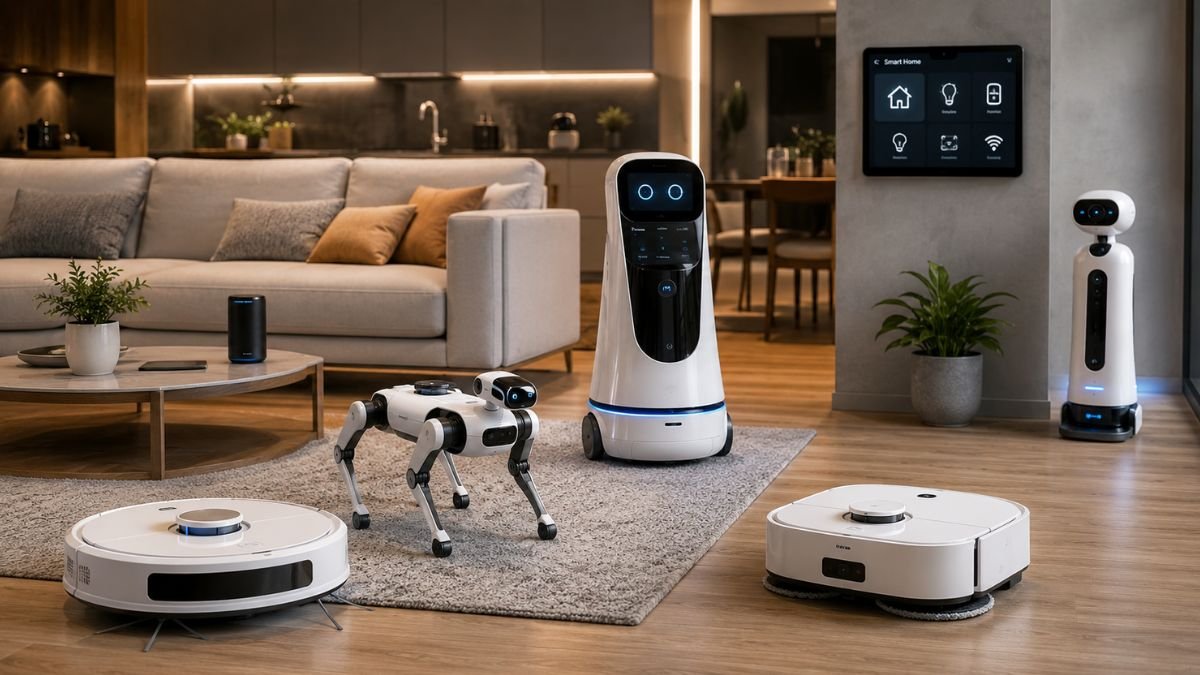
AI home robots are intelligent machines designed to assist with household tasks, home management, security, and daily convenience.
The best AI home robots in 2026 combine artificial intelligence, automation, advanced sensors, and smart home integration to help users save time, improve efficiency, and simplify everyday living.
For decades, home robots were largely confined to science fiction. Today, they are becoming a practical reality in homes around the world.
Thanks to advances in artificial intelligence, machine learning, computer vision, and robotics, modern AI home robots can perform tasks that once required constant human attention.
According to Statista, the global household robotics market continues to grow rapidly as consumers seek technologies that improve convenience and automate repetitive tasks.
What started with robot vacuums has evolved into a new generation of smart home robots capable of assisting with cleaning, monitoring, communication, and even companionship.
The appeal is easy to understand. People are busier than ever, and technologies that reduce workload while improving quality of life are becoming increasingly valuable. Whether you’re interested in home automation, smart living technology, or simply making daily routines easier, AI-powered robots are quickly becoming one of the most exciting categories in consumer technology.
What Are AI Home Robots?
AI home robots are autonomous or semi-autonomous machines that use artificial intelligence to perform household tasks, interact with users, and adapt to their environment.
Unlike traditional appliances, AI robots can:
- Analyze surroundings
- Learn user preferences
- Navigate independently
- Respond to voice commands
- Connect with smart home ecosystems
- Perform automated tasks
Many modern home robots continuously improve their performance through software updates and machine learning systems.
AI home robots are intelligent household assistants that use artificial intelligence, sensors, and automation to perform tasks and improve daily life.
Why AI Home Robots Are Becoming More Popular
Several technological developments have accelerated adoption.
Better Artificial Intelligence
Modern AI systems can process information more efficiently than ever before.
According to research from Google Research, advances in machine learning continue to improve navigation, object recognition, and contextual decision-making capabilities.
Improved Sensor Technology
Today’s robots use:
- Cameras
- LiDAR sensors
- Infrared sensors
- Depth mapping systems
These technologies allow robots to understand and navigate complex home environments.
Growing Smart Home Adoption
As more households adopt smart devices, AI robots can integrate seamlessly with:
- Smart speakers
- Security systems
- Lighting controls
- Home automation platforms
Types of AI Home Robots Available in 2026
Not all home robots serve the same purpose.
Robot Vacuum Cleaners
Robot vacuums remain the most widely adopted home robots.
Modern models can:
- Map entire homes
- Avoid obstacles
- Detect room types
- Self-empty dust bins
- Schedule cleaning automatically
Robot Mops
Advanced mopping robots can identify floor surfaces and adjust cleaning methods accordingly.
Many models now combine vacuuming and mopping functions.
Home Security Robots
Security-focused robots provide:
- Surveillance monitoring
- Motion detection
- Mobile patrol capabilities
- Real-time alerts
These systems add an additional layer of protection to smart homes.
AI Companion Robots
Companion robots are designed to interact with users.
Common features include:
- Voice communication
- Reminders
- Entertainment
- Information retrieval
- Smart home control
Personal Assistant Robots
These robots focus on productivity and home management.
They may assist with:
- Scheduling
- Notifications
- Household organization
- Device management
AI Home Robots by Category
| Category | Main Purpose | AI Capability |
|---|---|---|
| Robot Vacuum | Cleaning | High |
| Robot Mop | Floor Care | High |
| Security Robot | Monitoring | High |
| Companion Robot | Interaction | Medium-High |
| Personal Assistant Robot | Productivity | Medium-High |
This comparison highlights how different robots serve different household needs.
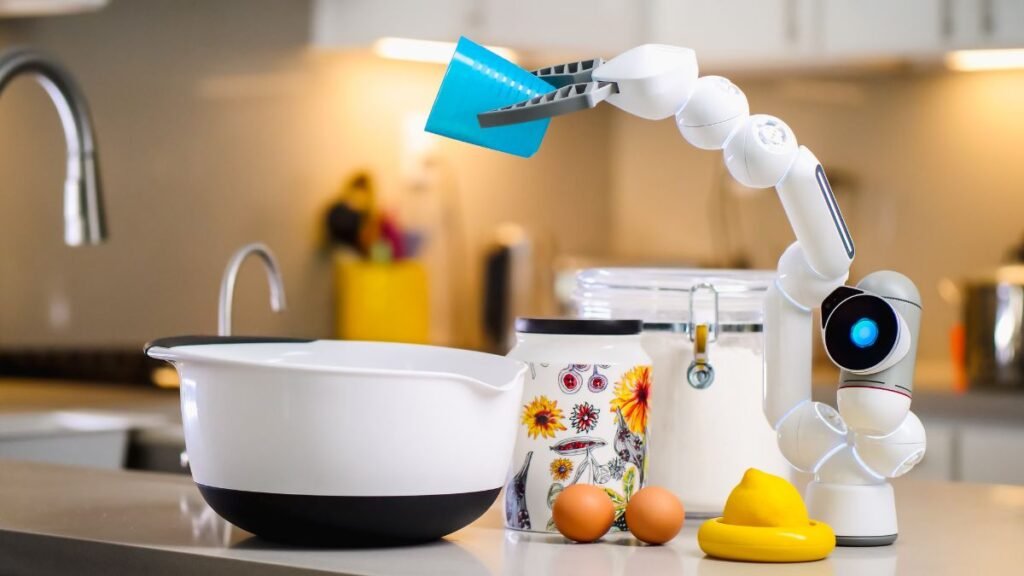
Key Benefits of AI Home Robots
Time Savings
One of the biggest advantages is automation.
Tasks that previously required daily attention can now be performed automatically.
Increased Convenience
Home robots help reduce repetitive responsibilities.
Examples include:
- Vacuuming floors
- Monitoring rooms
- Managing reminders
- Controlling connected devices
Smart Home Integration
Many AI household assistants work alongside existing smart devices.
This creates a more connected and efficient home environment.
Improved Accessibility
Certain robots can provide assistance for:
- Older adults
- Individuals with mobility limitations
- Busy professionals
These technologies help support independent living.
The greatest value of AI home robots is not replacing people—it is automating repetitive household tasks so users can focus on higher-value activities.
How AI Home Robots Navigate and Learn
Modern robots rely on several technologies working together.
Computer Vision
Computer vision enables robots to recognize:
- Furniture
- Walls
- Pets
- Objects
- Obstacles
Machine Learning
Machine learning allows robots to improve performance over time.
The more data they collect, the better they become at completing tasks efficiently.
Mapping Technology
Many robots create digital maps of homes.
This allows them to:
- Plan efficient routes
- Avoid restricted areas
- Remember room layouts
Voice Recognition
Voice interaction makes robots easier to control.
Many systems integrate with AI voice assistants and smart home platforms.
Similar AI-powered technologies are also improving how people manage information and productivity. Learn more about intelligent tools in our guide to AI note taking devices.
Potential Limitations of AI Home Robots
Despite impressive capabilities, AI home robots are not perfect.
Cost
Advanced robots can be expensive.
Premium models often include sophisticated sensors and AI features that increase prices.
Maintenance
Users must periodically:
- Clean sensors
- Empty containers
- Replace brushes
- Update software
Complex Environments
Homes with unusual layouts or excessive clutter can still present challenges.
Although navigation technology has improved significantly, no robot is flawless.
Privacy Concerns
Robots equipped with cameras and microphones collect data.
Consumers should carefully review privacy settings and manufacturer policies.
According to IEEE Spectrum, privacy and data security remain important considerations as household robotics become more sophisticated.
Are AI Home Robots Worth It?
The answer depends on individual needs and expectations.
Worth Considering If You:
- Have a busy schedule
- Value convenience
- Use smart home technology
- Want to automate routine tasks
- Appreciate emerging technology
Less Essential If You:
- Prefer manual control
- Have minimal automation needs
- Rarely use smart home devices
For many households, robot vacuums alone can provide enough value to justify the investment.
More advanced robots may offer additional benefits depending on lifestyle and budget.
AI home robots are increasingly worth considering because they automate time-consuming household tasks, integrate with smart homes, and continue improving through artificial intelligence.

The Future of AI Home Robots
The next generation of home robots is expected to be even more capable.
As AI technology becomes more integrated into everyday life, students and professionals are also adopting intelligent devices to improve productivity and learning. Explore more examples in our guide to AI gadgets for students.
Emerging trends include:
Multi-Purpose Robots
Future devices may combine:
- Cleaning
- Security
- Communication
- Home management
within a single platform.
Better Natural Interaction
Advances in conversational AI will improve communication between humans and robots.
Increased Autonomy
Robots are expected to make more independent decisions while requiring less supervision.
Deeper Smart Home Integration
According to developments highlighted by MIT Technology Review, future AI systems will increasingly operate across interconnected ecosystems rather than individual devices.
This could allow home robots to coordinate seamlessly with other technologies throughout the home.
Conclusion
AI home robots have evolved far beyond simple cleaning devices. Today’s robots can navigate complex environments, assist with household management, support smart home ecosystems, and automate repetitive tasks that consume valuable time.
While challenges such as cost, maintenance, and privacy remain important considerations, the technology continues to improve rapidly.
For homeowners interested in greater convenience and automation, AI home robots offer practical benefits that continue to improve as the technology evolves.
As artificial intelligence and robotics continue advancing, home robots are likely to become even more capable, versatile, and integrated into everyday life.
AI Home Robots FAQ
What are AI home robots?
AI home robots are intelligent machines that use artificial intelligence, sensors, and automation to perform household tasks, assist users, and interact with smart home systems.
What is the most popular AI home robot?
Robot vacuum cleaners remain the most widely adopted AI home robots due to their convenience, automation capabilities, and affordability.
Can AI home robots learn over time?
Yes. Many modern robots use machine learning algorithms that allow them to improve navigation, efficiency, and task performance through experience.
Are AI home robots safe?
Most consumer home robots are designed with safety features such as obstacle detection, collision avoidance, and emergency shutdown systems.
Do AI home robots work with smart homes?
Many models integrate with popular smart home platforms and voice assistants, allowing centralized control and automation.
Are AI home robots expensive?
Prices vary significantly. Basic cleaning robots can be relatively affordable, while advanced companion and security robots may cost substantially more.
What is the future of AI home robots?
Future robots are expected to become more autonomous, multifunctional, conversational, and deeply integrated into smart home ecosystems.