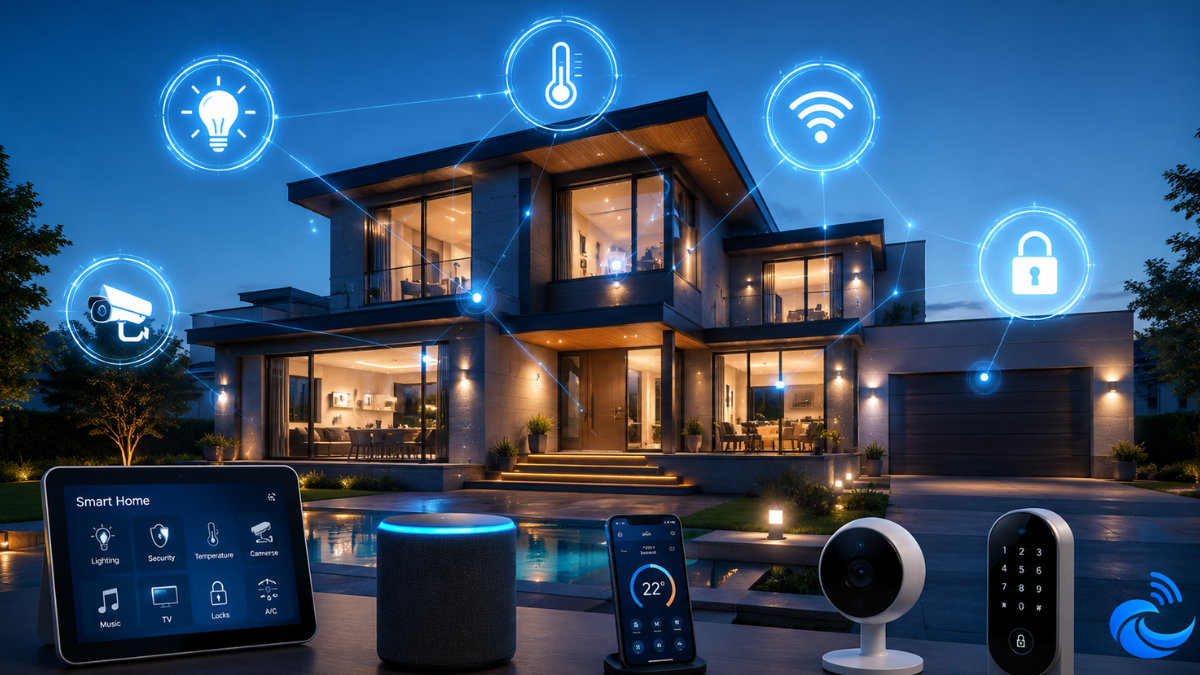
AI gadgets for smart homes are intelligent devices that use artificial intelligence to automate tasks, improve convenience, enhance security, and optimize energy usage. From smart speakers and AI-powered security cameras to robotic vacuums and smart thermostats, these devices can learn user habits and make homes more efficient.
This guide explains how AI gadgets work, which devices matter most, and how to build a smarter home in 2026.
The smart home market has evolved rapidly over the last few years, and artificial intelligence is now the driving force behind many of the most useful household technologies.
According to data published by the Statista, the global smart home market continues to grow as consumers adopt connected devices for security, convenience, and energy efficiency.
Unlike traditional smart devices that simply follow commands, modern AI gadgets can learn routines, recognize patterns, and make decisions based on user behavior.
For example, an AI-powered thermostat can automatically adjust temperatures based on occupancy patterns, while a smart security camera can distinguish between a family member and an unknown visitor.
As AI technology becomes more affordable, homeowners are increasingly looking for practical solutions that genuinely improve daily life rather than simply adding more gadgets. Understanding how different devices provide real value is essential for building an efficient and future-proof smart home.
What Are AI Gadgets for Smart Homes?
AI gadgets for smart homes are connected devices that use machine learning, computer vision, natural language processing, or predictive algorithms to automate household tasks and improve decision-making.
Unlike standard automation systems that rely on fixed rules, AI-enabled devices continuously analyze data and adapt their behavior over time.
Common examples include:
- AI smart speakers
- AI security cameras
- Smart thermostats
- Robot vacuums
- Smart lighting systems
- Smart displays
- AI-powered doorbells
- Smart appliances
These devices typically connect through Wi-Fi and communicate using platforms such as Alexa, Google Home, Apple HomeKit, or proprietary ecosystems.
Why AI Gadgets Are Becoming Essential in Modern Homes
Several factors are driving adoption:
Improved Convenience
AI gadgets reduce repetitive tasks by automating everyday routines.
Examples include:
- Turning lights on automatically
- Adjusting room temperatures
- Scheduling cleaning sessions
- Managing shopping lists
- Monitoring home security
Enhanced Security
According to the National Institute of Standards and Technology (NIST), advances in AI-powered computer vision have significantly improved object and facial recognition capabilities.
Modern security cameras can:
- Detect people versus animals
- Recognize familiar faces
- Identify suspicious behavior
- Send real-time alerts
Better Energy Efficiency
Smart thermostats and intelligent lighting systems can reduce energy waste.
AI-powered energy management systems can help reduce energy waste by optimizing temperature, lighting, and appliance usage.
AI smart home devices save time, improve security, and help reduce energy consumption by learning user habits and automating routine household tasks.
Types of AI Gadgets for Smart Homes
AI Smart Speakers
Smart speakers remain the central hub of most smart homes.
Popular features include:
- Voice commands
- Home automation control
- Music streaming
- Shopping assistance
- Smart device integration
Popular ecosystems:
| Platform | Strengths | Best For |
|---|---|---|
| Alexa | Largest device compatibility | General smart homes |
| Google Assistant | Superior search capabilities | Information access |
| Apple HomeKit | Strong privacy features | Apple users |
AI Security Cameras
Modern security cameras use advanced AI algorithms.
Features often include:
- Facial recognition
- Motion detection
- Vehicle detection
- Package recognition
- Night vision enhancement
Many systems can now distinguish between normal and unusual activity, reducing false alerts.
Smart Thermostats
Smart thermostats represent one of the most practical uses of AI.
Benefits include:
- Automated temperature control
- Learning household schedules
- Occupancy detection
- Energy optimization
The U.S. Department of Energy highlights that programmable and optimized temperature management can help improve energy efficiency and reduce energy consumption over time.
Robot Vacuums
AI-powered robot vacuums have become remarkably capable.
Modern models can:
- Map entire homes
- Avoid obstacles
- Recognize rooms
- Schedule cleanings
- Return automatically for charging
Smart Lighting Systems
AI lighting systems adjust illumination based on:
- Time of day
- Occupancy
- Ambient light levels
- User preferences
These systems help improve comfort while reducing unnecessary electricity usage.
AI-powered lighting is just one example of how artificial intelligence is changing everyday technology. For a broader overview of the most useful devices available today, explore our guide to the best AI gadgets worth buying in 2026.
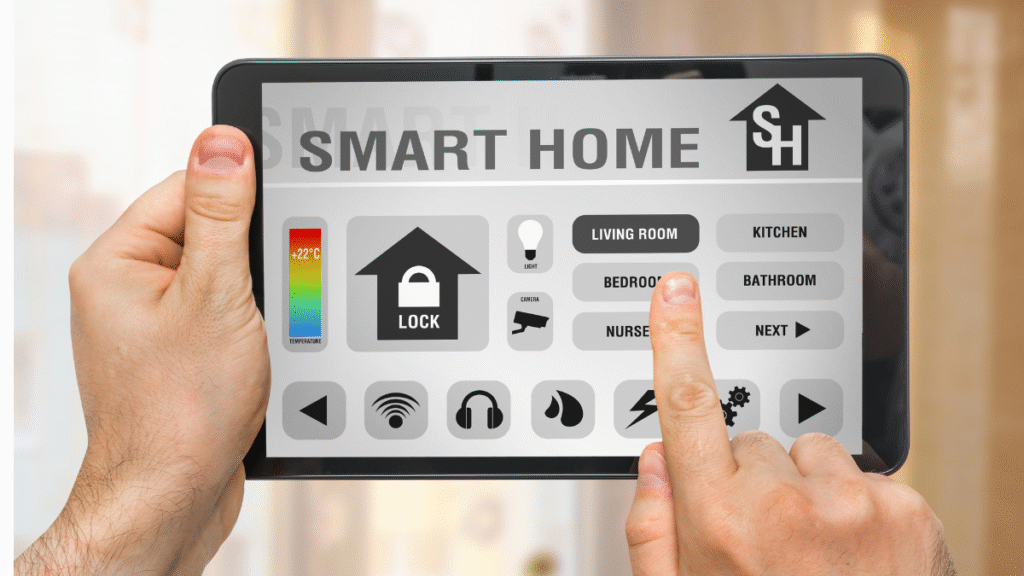
How AI Learns Your Habits
One of the biggest advantages of AI gadgets is their ability to adapt.
Data Collection
Devices gather information such as:
- Usage times
- Voice commands
- Temperature preferences
- Movement patterns
- Lighting preferences
Pattern Recognition
Machine learning algorithms analyze behavior and identify recurring patterns.
Examples:
- Preferred bedtime routines
- Typical work schedules
- Frequently used rooms
Predictive Automation
After identifying patterns, devices begin making predictions.
For example:
- Lights may turn on before you enter a room.
- Thermostats may begin heating before you wake up.
- Robot vacuums may clean when the house is empty.
AI smart home devices use machine learning to analyze household behavior and automate tasks based on recurring patterns, improving convenience and efficiency over time.
Building an AI Smart Home: Step-by-Step
For beginners, building a smart home can feel overwhelming.
The most effective approach is gradual implementation.
Step 1: Choose an Ecosystem
Select one primary platform:
- Alexa
- Google Home
- Apple HomeKit
Consistency improves compatibility and simplifies management.
Step 2: Start With Core Devices
Recommended first devices:
- Smart speaker
- Smart plugs
- Smart bulbs
These devices offer immediate benefits with minimal investment.
Step 3: Add Security
Next, consider:
- Smart cameras
- Video doorbells
- Smart locks
Security upgrades often deliver the most noticeable value.
Step 4: Expand Automation
Additional upgrades may include:
- Smart thermostats
- Smart blinds
- Smart sensors
- Robot vacuums
Step 5: Create Routines
Automation routines can combine multiple actions.
Example:
Good Morning Routine
- Lights turn on
- Thermostat adjusts temperature
- Coffee maker starts
- Weather report plays
Potential Drawbacks of AI Gadgets
Although AI gadgets provide significant benefits, there are limitations.
Privacy Concerns
Many devices collect data continuously.
Consumers should:
- Review privacy settings
- Enable two-factor authentication
- Update firmware regularly
Compatibility Issues
Mixing ecosystems may create challenges.
Before purchasing, verify compatibility with existing devices.
Internet Dependence
Most smart home devices require a reliable internet connection.
Network interruptions may temporarily reduce functionality.
AI Smart Home Trends for 2026
Several trends are shaping the future of smart homes.
Generative AI Integration
Voice assistants are becoming more conversational and context-aware.
Improved Edge AI
Processing increasingly occurs directly on devices rather than in the cloud.
Benefits include:
- Faster responses
- Enhanced privacy
- Reduced latency
Unified Standards
The growing adoption of the Matter standard is helping improve interoperability between different smart home ecosystems.
The official Matter Standard is helping reduce compatibility issues across brands.
AI-Powered Energy Management
Energy optimization systems are becoming increasingly sophisticated.
Future devices may automatically:
- Shift appliance usage
- Optimize charging schedules
- Reduce peak-hour consumption

How to Choose AI Gadgets for Your Smart Home
For most homeowners, the answer is yes.
The key is focusing on devices that solve real problems rather than purchasing technology for its novelty.
The highest-value categories typically include:
- Smart speakers
- Security cameras
- Smart thermostats
- Robot vacuums
- Smart lighting
These devices consistently provide measurable improvements in convenience, security, and efficiency.
While smart home devices represent one of the fastest-growing areas of AI technology, other categories such as wearables, productivity tools, and personal assistants are also expanding quickly. See our complete guide to AI gadgets worth buying in 2026 to explore more innovative devices.
Conclusion
AI gadgets are transforming modern homes by combining automation, intelligence, and convenience. From smart speakers and AI-powered security cameras to thermostats that learn your routines, today’s smart home devices offer practical benefits that extend far beyond simple remote control.
The most successful smart home setups begin with a clear ecosystem, a few foundational devices, and gradual expansion over time. As artificial intelligence continues to evolve, homeowners can expect even smarter automation, better energy management, and more personalized experiences.
If you’re considering upgrading your living space, using carefully selected AI gadgets can be one of the most effective ways to create a safer, more efficient, and more comfortable home.
AI Gadgets FAQ: Everything You Need to Know Before Choosing
What are AI gadgets for smart homes?
AI gadgets for smart homes are connected devices that use artificial intelligence to automate tasks, learn user behavior, improve convenience, and optimize household operations. Examples include smart speakers, security cameras, thermostats, and robot vacuums.
Do AI smart home devices require Wi-Fi?
Most AI smart home devices rely on Wi-Fi for communication, updates, and cloud-based processing. Some advanced devices also offer limited offline functionality.
Which smart home ecosystem is best?
The best ecosystem depends on your needs. Alexa offers broad compatibility, Google Home provides strong AI assistance, and Apple HomeKit emphasizes privacy and security.
Can AI gadgets save money?
Yes. Devices such as smart thermostats, smart lighting systems, and energy-monitoring solutions can help reduce energy consumption and lower utility costs.
Are AI smart home devices secure?
Most reputable devices include encryption and security features. Users should enable two-factor authentication, maintain firmware updates, and follow recommended security practices.
Which AI gadget is useful for beginners?
A smart speaker is often the best starting point because it acts as a central hub for controlling other smart home devices.
Will AI gadgets become more useful in the future?
Yes. Advances in generative AI, machine learning, and interoperability standards are expected to make smart home devices more intelligent, personalized, and efficient over the coming years.