Last updated on November 2nd, 2026 at 08:15 pm
Smart rings are small wearable devices that use optical, temperature, and motion sensors to track sleep, heart rate, activity, and recovery-related patterns.
They collect information throughout the day and night, then use smartphone applications to turn sensor readings into understandable insights. Their main advantage is discreet monitoring, although accuracy and available features vary between devices.
Smart rings are changing how people interact with personal technology. Instead of checking a screen throughout the day, users can wear a compact device that quietly collects information about their daily routines and physiological patterns.
For people interested in improving sleep habits, understanding recovery, or monitoring general activity, this approach can feel more convenient than wearing a smartwatch.
However, the technology raises important questions. How can a ring measure heart rate? Can it accurately identify sleep stages? What do recovery scores actually mean? And can a smart ring provide reliable information about blood pressure or other medical conditions?
These questions matter because smart rings combine real sensor measurements with algorithm-generated estimates. Understanding the difference helps users interpret the information correctly.
For example, the original Galaxy Ring weighs approximately 2.3–3.0 grams, depending on size, according to Samsung’s official Galaxy Ring specifications. This illustrates how sophisticated wearable technology can fit inside a remarkably small enclosure.
The real value of smart rings comes from understanding what their measurements reveal, where their limitations begin, and how they fit into everyday life.
What Are Smart Rings and How Do They Work?
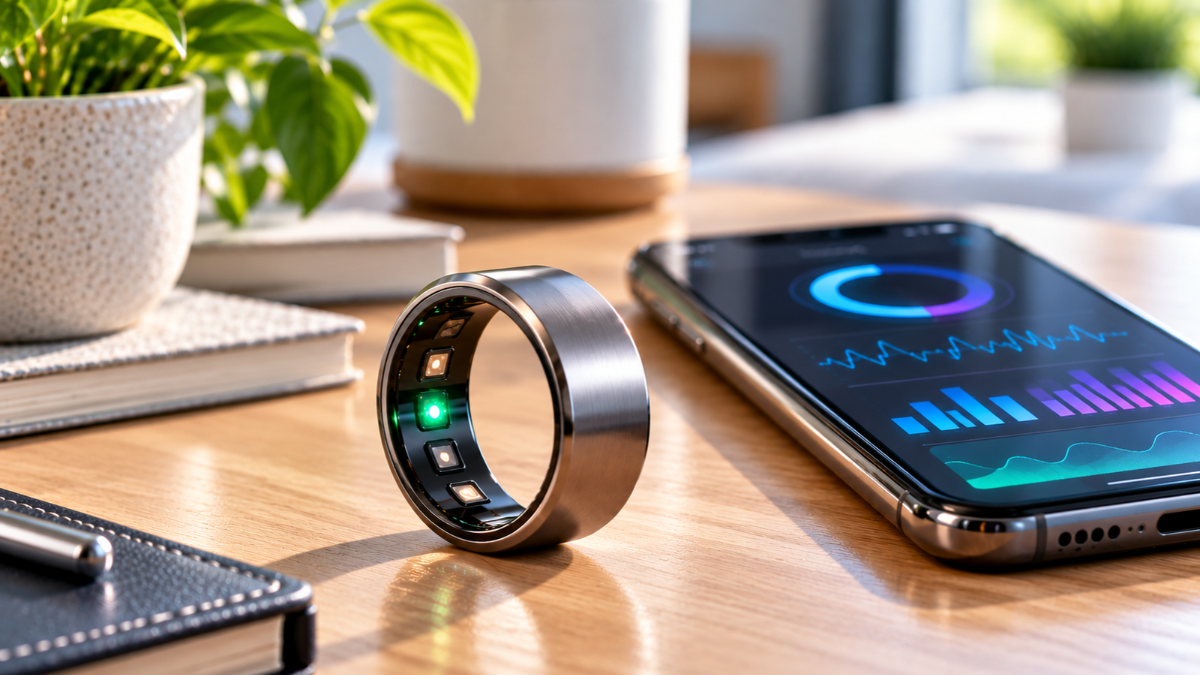
A smart ring is a miniature wearable electronic device designed to collect information through sensors positioned around the finger.
Most health-focused smart rings combine several components inside a compact enclosure:
- Optical sensors that measure changes associated with blood circulation.
- Temperature sensors that monitor changes in skin temperature.
- Motion sensors that detect movement and acceleration.
- A small processor that manages sensor readings.
- A rechargeable battery and wireless communication components.
Unlike smartwatches, most smart rings do not include screens, speakers, or conventional application interfaces.
Instead, they collect measurements and transfer information to a companion smartphone application.
The Technology Inside a Smart Ring
The process begins when the sensors detect physical changes.
Optical sensors monitor signals related to blood flow. Motion sensors register movement, while temperature sensors measure changes at the skin.
The ring’s electronics process or temporarily store these readings. Depending on the design, some calculations occur directly on the device, while more complex analysis happens in the smartphone application or associated cloud services.
For example, an overnight sleep assessment might combine changes in movement, heart rate, heart rate variability, and temperature.
The software then uses mathematical models to estimate when the wearer was awake or asleep.
This is an important distinction: the ring collects physical signals, but the application interprets those signals.
How Optical Heart Rate Sensors Work
Most health-focused smart rings use photoplethysmography, or PPG.
PPG measures changes in light absorption or reflection caused by variations in blood volume beneath the skin.
The sensor emits light toward the skin. A photodetector measures the returning light, and the processor analyzes repeating patterns associated with heartbeats.
These signals can be used to estimate heart rate.

However, the measurement is not identical to an electrocardiogram, which records electrical activity from the heart.
PPG is an optical measurement technique, while ECG uses electrical signals.
Both can provide useful information, but they measure different physical phenomena.
The quality of PPG readings depends on factors such as contact pressure, motion, circulation, sensor placement, and signal processing.
A ring that fits poorly may struggle to maintain consistent contact with the finger.
Why Smart Rings Use Multiple Sensors
One sensor rarely provides enough information to interpret complex human behavior.
Consider a person lying quietly in bed while reading.
A motion sensor might detect very little movement, which could resemble sleep.
However, heart rate and other physiological signals may indicate that the person is still awake.
Combining multiple signals helps the software distinguish between different possibilities.
This approach is called sensor fusion.
Sensor fusion means combining information from several sensors to produce an estimate that may be more useful than any single measurement.
It is a fundamental part of modern wearable technology, including smartwatches and fitness trackers.
How Smart Rings Synchronize Data
Most smart rings use Bluetooth Low Energy (BLE) to communicate with smartphones.
BLE is designed for devices that exchange relatively small amounts of information while minimizing energy consumption.
The ring may collect information continuously or at intervals, depending on the feature and manufacturer.
When synchronization occurs, the application receives the available measurements and updates its charts and summaries.
Some rings can temporarily store data without an active phone connection.
However, offline storage capacity, synchronization frequency, and internet requirements vary by model.
What Do Smart Rings Track?
Smart rings can monitor several types of information, but not every measurement is obtained in the same way.
Some readings come directly from sensors. Others are calculated from those readings, while more complex scores depend on proprietary algorithms.
Understanding these categories prevents users from treating every number as an equally precise measurement.
Direct Measurements vs Estimates vs Algorithmic Scores
| Metric | How it is produced | Important limitation |
|---|---|---|
| Optical pulse signal | Detected through PPG sensors | Signal quality changes with movement and contact |
| Heart rate | Estimated from pulse patterns | May become less reliable during vigorous movement |
| HRV | Calculated from estimated pulse intervals | Optical estimates can differ from ECG-derived measurements |
| Skin temperature | Measured by a temperature sensor | Does not directly represent core body temperature |
| Movement | Detected by accelerometers | Hand movements may not reflect whole-body activity |
| Step count | Estimated from movement patterns | Can overcount or miss certain activities |
| Sleep stages | Estimated using multiple signals and algorithms | Not equivalent to direct laboratory sleep measurements |
| Recovery score | Proprietary combination of physiological metrics | Scores are not standardized across manufacturers |
| Stress score | Algorithmic interpretation of selected signals | Does not directly measure psychological stress |
This distinction becomes particularly important when comparing smart rings from different manufacturers.
Two rings may collect similar physical signals but produce different scores because their algorithms use different assumptions, weightings, and reference values.
Smart rings are one example of health monitoring wearables that use compact sensors to collect physiological information throughout the day and night.
For a broader explanation of how different wearable devices monitor heart rate, blood oxygen levels, sleep patterns, and other health-related measurements, explore our guide to health monitoring wearables.
Smart Rings for Sleep Tracking
Sleep tracking is one of the most established applications of smart ring technology.
A ring can monitor movement and physiological signals throughout the night without requiring the user to interact with a screen.
Depending on the device, the application may estimate total sleep time, sleep onset, nighttime awakenings, and time spent in different sleep stages.
Most consumer sleep trackers classify sleep into broad categories such as light sleep, deep sleep, and rapid eye movement (REM) sleep.
These categories describe different patterns of sleep physiology.
However, smart rings do not directly measure the brain activity used in clinical sleep-stage classification.
Instead, they infer sleep stages from indirect signals.
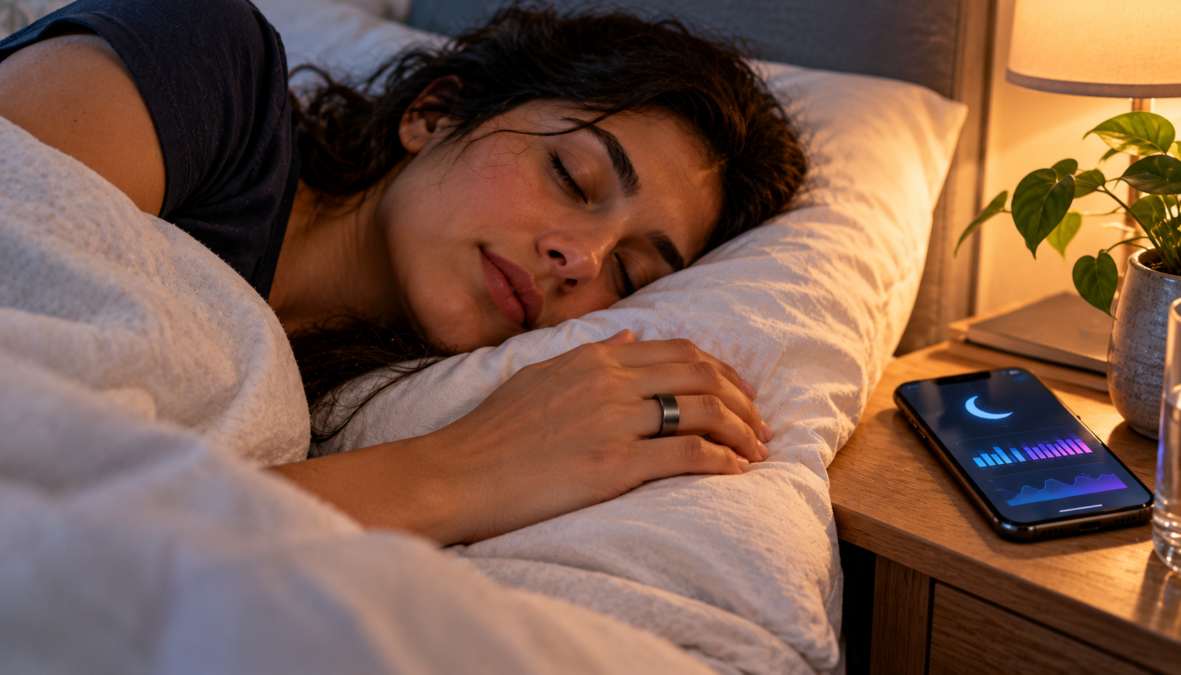
A 2024 validation study published in Sleep Medicine examined the Oura Ring Generation 3 sleep algorithm against polysomnography. The study included 96 participants and found good agreement for several overall sleep measures, while identifying differences in certain estimates.
The findings demonstrate that wearable sleep tracking can be useful, but performance depends on the specific device, algorithm, metric, and population studied.
Why Sleep Stage Accuracy Is Complicated
A smart ring may correctly estimate that someone slept for approximately seven hours while making less accurate predictions about how those hours were distributed between sleep stages.
This happens because detecting general inactivity is different from identifying the physiological characteristics of REM or deep sleep.
A laboratory sleep study uses specialized equipment, including electroencephalography (EEG), to measure brain activity.
A ring relies on indirect indicators.
For everyday users, consistency in bedtime, sleep duration, and nighttime patterns may provide more practical value than treating every sleep-stage estimate as exact.
For example, someone who repeatedly sleeps six hours on weekdays and eight hours on weekends may discover a meaningful pattern even when individual sleep-stage estimates vary.
Smart Rings for Heart Rate and Heart Rate Variability
Heart rate measures the number of heartbeats per minute.
Heart rate variability, or HRV, describes variation in the time intervals between successive heartbeats.
These measurements provide different perspectives on cardiovascular and autonomic nervous system activity.
HRV can change in response to sleep, exercise, stress, illness, and other physiological conditions.
However, a higher HRV does not automatically mean better health.
Individual differences matter, and measurements are influenced by timing, body position, breathing, and the measurement method.
Many wearable platforms compare HRV against a personal baseline rather than relying exclusively on population averages.
This makes long-term tracking especially useful.
For example, a person may notice that their nighttime HRV differs consistently after unusually demanding exercise sessions.
That observation may help them recognize patterns, but it does not independently establish a medical explanation.
Skin Temperature and Recovery Patterns
Temperature sensors measure changes near the surface of the finger.
Skin temperature is affected by environmental conditions, circulation, sleep, and individual physiology.
As a result, the most useful information often comes from changes relative to a personal baseline.
A ring may identify that nighttime skin temperature has increased compared with the user’s usual pattern.
However, this does not automatically indicate fever or illness.
Some platforms also use temperature trends to support menstrual cycle-related insights.
These functions vary in their intended purpose, accuracy, and regulatory status.
A temperature trend should not be treated as a definitive fertility or medical measurement.
Activity and Step Tracking
Smart rings use accelerometers to detect movement.
Software interprets the resulting signals to estimate activity levels and steps.
However, finger movement does not always correspond directly to walking.
Someone working with their hands may generate movement patterns that resemble certain activities.
Conversely, carrying an object or keeping the hand relatively still while walking may affect movement detection.
These limitations explain why step counts from different wearables may not match.
For readers interested in the broader technology behind activity monitoring, our Fitness Trackers Explained guide covers how wearable sensors interpret movement and fitness-related measurements.
How Accurate Are Smart Rings for Health Tracking?
Smart ring accuracy cannot be described by one universal percentage.
Each metric requires separate evaluation.
A ring may perform well when estimating resting heart rate but less consistently when measuring signals during vigorous movement.
Similarly, estimating total sleep duration is a different technical challenge from identifying individual sleep stages.
What Scientific Validation Actually Means
A device is validated when its measurements are evaluated against an appropriate reference method under defined conditions.
For sleep tracking, polysomnography is commonly used as a reference.
For heart rate, comparisons may involve ECG-based measurements.
Validation results should be interpreted according to the study’s participants, activities, measurement conditions, and statistical methods.
For example, a sleep-tracking study involving healthy adults does not automatically establish the same performance for children, people with sleep disorders, or all future versions of the device.
Software updates can also change algorithm behavior.
A validated result for one smart ring model does not establish equivalent accuracy for every smart ring.
Why Smart Ring Readings Sometimes Differ
Imagine someone wearing a smart ring and a smartwatch simultaneously.
The ring reports a resting heart rate of 58 beats per minute, while the watch reports 61.
This difference does not necessarily mean one device is defective.
The devices may use different sampling intervals, filtering methods, and definitions of resting heart rate.
Sensor position also matters.
A finger and wrist have different anatomical characteristics, and the devices may collect readings at different times.
Differences become more noticeable during movement, when optical signals can be disrupted.
Comparing trends measured consistently by the same device is often more useful than expecting identical numbers across platforms.
What Happens When a Smart Ring Fits Incorrectly?
Fit affects both comfort and measurement quality.
A ring that is too loose may rotate or shift, reducing consistent contact between its sensors and the skin.
A ring that is too tight may cause discomfort, particularly when fingers swell.
Finger size can change throughout the day because of temperature, activity, and other factors.
This is why many manufacturers provide sizing kits designed specifically for their products.
Traditional jewelry sizing may not always provide an accurate match.
For consistent tracking, the ring should fit securely without causing pressure or restricting normal comfort.
Can Smart Rings Measure Blood Pressure?
Blood pressure is a particularly sensitive measurement because inaccurate readings can affect medical decisions.
Some wearable products claim to estimate blood pressure without an inflatable cuff.
However, these claims require careful evaluation.
In September 2025, the U.S. Food and Drug Administration published a safety communication about unauthorized blood pressure monitoring devices, specifically including wearable features in smartwatches and smart rings.
Cuffless blood pressure estimation remains a technically challenging area.
A ring’s ability to measure pulse-related signals does not automatically establish its ability to measure blood pressure accurately.
For medical blood pressure monitoring, consumers should use appropriately validated and authorized devices.
Can Smart Rings Measure Blood Glucose?
Blood glucose measurement is another area where marketing claims can exceed demonstrated capabilities.
In February 2024, the FDA published a warning about smartwatches and smart rings claiming to measure blood glucose without piercing the skin.
The agency stated that it had not authorized, cleared, or approved any smartwatch or smart ring intended to independently measure or estimate blood glucose in that manner.
This is different from a wearable application displaying glucose readings collected by a separate authorized continuous glucose monitor.
Displaying external sensor data does not mean the ring itself measures glucose.
Do Smart Rings Have ECG Sensors?
Most mainstream health-focused smart rings use optical sensors rather than ECG electrodes.
PPG and ECG are fundamentally different technologies.
PPG detects changes associated with blood volume, while ECG records the electrical activity of the heart.
Some specialized wearable products may advertise ECG-related functionality, but consumers should evaluate the specific hardware, evidence, and intended use.
A heart rate graph should not be mistaken for an electrocardiogram.
Smart Rings vs Smartwatches and Fitness Trackers
Smart rings, smartwatches, and fitness trackers all collect information about physical activity and physiological patterns.
However, their designs prioritize different experiences.
A smart ring emphasizes compact, passive monitoring.
A smartwatch combines wearable sensing with interactive functions.
A fitness tracker typically focuses on activity monitoring through a lightweight wrist-worn design.
| Feature | Smart Ring | Smartwatch | Fitness Tracker |
|---|---|---|---|
| Primary design | Passive monitoring | Interactive wearable computing | Activity and fitness tracking |
| Display | Usually absent | Usually touchscreen | Often small display |
| Sleep monitoring | Common | Common | Common |
| Heart rate tracking | Common | Common | Common |
| Built-in GPS | Uncommon | Available on many models | Model-dependent |
| Notifications | Usually through phone app | Often displayed on watch | Available on many models |
| Workout interaction | Limited | Often extensive | Model-dependent |
| Battery life | Commonly several days | Varies considerably | Often several days |
| Charging method | Dock or case | Charging puck or dock | Model-dependent |
| Main limitation | Limited interaction | Larger size and charging demands | Fewer general-purpose features |

Why Smart Rings Are Popular for Sleep Monitoring
A compact ring may be more comfortable for some people during sleep than a wrist-worn device.
The absence of a screen also reduces the temptation to interact with the device during the night.
However, comfort is subjective.
Some users dislike wearing rings while sleeping, while others prefer them to watches.
The best form factor depends on personal comfort, finger fit, and daily routines.
Why Smartwatches Remain More Versatile
Smartwatches generally offer more direct interaction.
Depending on the model, they can display messages, provide navigation, control music, and show workout statistics in real time.
Many also include built-in GPS.
A smart ring usually cannot replace these functions.
Someone primarily interested in running routes or checking notifications may find a smartwatch more practical.
Our Smartwatch Technology Explained article explains how smartwatch sensors, applications, and communication features work.
Can a Smart Ring and Smartwatch Work Together?
Yes, they can serve complementary purposes.
For example, someone might use a smartwatch during outdoor exercise and a smart ring for overnight monitoring.
However, combining devices introduces data-management challenges.
Different applications may estimate the same metric differently.
Some health platforms also require users to configure data permissions or source priorities to prevent duplicated activity records.
Using two wearables is most useful when each serves a distinct purpose rather than collecting redundant information without a clear benefit.
Smart Ring Design, Battery Life and Everyday Limitations
Smart ring technology involves engineering compromises.
The small enclosure must accommodate sensors, electronics, a battery, and protective materials while remaining comfortable enough for daily wear.
Why Battery Life Varies
Battery life depends on the size of the battery, the power consumption of the sensors, synchronization behavior, and software settings.
A ring that measures several signals frequently may consume more power than one operating with fewer features enabled.
For example, Samsung’s original Galaxy Ring specifications list battery capacities ranging from 18 to 23.5 mAh across its original size range, with up to seven days of battery life under specified conditions.
Real-world battery life can vary with usage patterns and battery aging.
Charging cases may provide additional convenience, but their capacity should not be confused with the capacity of the battery inside the ring.
Are Smart Rings Comfortable for Everyday Activities?
Comfort depends on ring thickness, weight, shape, and fit.
A ring may feel unobtrusive during office work but uncomfortable when gripping heavy objects.
Weightlifting, manual labor, and activities involving strong gripping forces deserve particular attention.
Rings can create pressure points or become caught on equipment.
Removing a ring during activities where jewelry creates a safety risk is often the more appropriate choice.
Are Smart Rings Waterproof?
Water resistance varies by model.
Some rings are designed to tolerate routine exposure to water, but water-resistance ratings must be interpreted according to the manufacturer’s testing conditions.
A rating does not automatically guarantee suitability for every swimming, diving, high-pressure water, or hot-water situation.
Repeated exposure to chemicals and physical impacts can also affect durability.
Users should distinguish between resistance to water exposure and resistance to scratching or mechanical damage.
Smart Rings for iPhone and Android
Smartphone compatibility is an essential practical consideration.
Some rings support both iOS and Android, while others are restricted to specific ecosystems.
Compatibility can also depend on the operating system version and supported application services.
For example, Samsung’s original Galaxy Ring specifications identify Android compatibility requirements.
This means consumers should not assume that every smart ring works with an iPhone simply because it uses Bluetooth.
Compatibility with Apple Health, Health Connect, and other data platforms should also be checked separately.
Smart Rings With No Subscription
Some smart rings include core monitoring features without requiring a recurring membership.
Others use subscription-based software models.
A subscription may unlock detailed sleep analysis, historical trends, advanced insights, or additional integrations.
The hardware may continue functioning without a subscription while access to certain information becomes limited.
The key distinction is between owning the physical ring and having access to the full software experience.
Subscription arrangements and included features can change, so current terms matter more than general assumptions about a brand.
Privacy and Personal Data
Smart rings may collect sensitive information about sleep patterns, activity, physiological changes, and daily routines.
The value of long-term tracking comes partly from accumulating historical information.
That makes privacy an important part of the technology.
Users should understand whether data is processed locally or in cloud services, what permissions are required, and whether information can be exported or deleted.
It is also useful to review how third-party integrations handle information shared from the ring’s application.
How to Interpret Smart Ring Data Without Misunderstanding It
The most useful way to approach smart ring data is to treat it as information about patterns rather than a continuous judgment of personal health.
Establishing a Personal Baseline
A baseline represents the range of measurements normally observed for an individual under reasonably consistent conditions.
Many smart ring applications require multiple days or weeks of data to personalize their insights.
The exact period depends on the manufacturer and the feature.
A single night rarely provides enough context to establish meaningful long-term patterns.
For example, an unusually high resting heart rate may appear significant until the user considers their normal range and recent activities.
Understanding Recovery Scores
Recovery scores are simplified interpretations of multiple measurements.
A platform may combine resting heart rate, HRV, sleep patterns, and other factors into a single numerical result.
This can make complex information easier to understand.
However, a recovery score is not a universal physiological measurement.
Different platforms use different algorithms.
A score of 85 on one ring is not necessarily equivalent to 85 on another.
The score may be useful for recognizing changes within one system, but it should not be treated as an objective measurement of overall health.
Recognizing Measurement Errors
Several situations can produce unusual readings:
- A ring becomes loose during sleep.
- The user frequently moves their hands during a measurement.
- The sensors lose consistent skin contact.
- The application has incomplete data because synchronization was interrupted.
- The device changes its measurement algorithm after a software update.
When a reading appears unusual, checking fit, data completeness, and consistency across multiple measurements can help identify possible technical explanations.
Why Trends Are More Useful Than Isolated Numbers
Consider someone who notices lower-than-usual HRV after a demanding workout.
One reading does not prove that the person has recovered poorly.
However, repeated changes alongside shorter sleep duration or elevated resting heart rate may reveal a pattern worth understanding.
Similarly, consistently changing bedtimes may provide a clearer explanation for sleep irregularity than a single nightly sleep score.
The goal is to use wearable information as context for everyday habits rather than allowing individual numbers to dominate decisions.
The Future of Smart Ring Technology
Future smart rings will likely benefit from improvements in sensor miniaturization, energy efficiency, and software interpretation.
More efficient components could allow manufacturers to improve functionality without substantially increasing device size.
Advanced algorithms may also become better at combining multiple physiological signals.
However, more complex analysis does not automatically guarantee more accurate conclusions.
New capabilities still require appropriate testing and validation.
Integration with smartphones and broader health platforms may also become more important.
Users increasingly interact with multiple connected devices, and meaningful data exchange can make wearable information easier to understand.
Privacy, transparency, and software support will remain important considerations as these ecosystems develop.
Smart rings represent one part of the broader movement toward unobtrusive computing, where technology collects useful information without demanding constant attention.
To understand how rings fit alongside watches, fitness bands, and other connected devices, explore The Complete Wearable Technology Guide.
Conclusion: The Real Value of Smart Rings
Smart rings demonstrate how advanced sensors and software can transform a small everyday accessory into a personal monitoring device.
Their main strengths are discreet design, passive data collection, and the ability to reveal patterns in sleep, activity, and physiological measurements.
However, not every feature offers the same level of accuracy.
Direct sensor signals, calculated measurements, and proprietary wellness scores must be interpreted differently.
Smart rings are most useful when people understand their limitations, maintain consistent wearing habits, and focus on long-term patterns rather than isolated readings.
As wearable technology continues to develop, the most meaningful improvements will come from better accuracy, clearer explanations, stronger privacy protections, and practical insights that help users understand their daily routines.
Important Notice
The information in this article is provided for educational and informational purposes only. Smart ring measurements and wellness scores do not replace medical evaluation, diagnosis, or treatment. Consult a qualified healthcare professional before making medical decisions based on wearable device data.
Frequently Asked Questions About Smart Rings
What do smart rings actually do?
Smart rings collect information about physiological signals and movement using miniature sensors. Depending on the device, they can estimate heart rate, sleep duration, activity levels, and recovery-related trends. The information is usually presented through a smartphone application. Most health-focused models prioritize passive monitoring rather than displaying notifications or replacing smartphone functions.
Are smart rings accurate for sleep tracking?
Smart rings can provide useful estimates of sleep duration and nighttime patterns, but accuracy varies by device and measurement. Sleep-stage classification relies on algorithms interpreting indirect physiological signals rather than directly recording brain activity. Validation studies show promising results for certain devices, although individual measurements can differ from laboratory sleep assessments.
Can smart rings monitor blood pressure?
Some wearable products advertise blood pressure estimation, but consumers should not assume those measurements are clinically reliable. The FDA has warned against unauthorized blood pressure devices and software features, including those used in smart rings. Medical blood pressure monitoring should rely on appropriately validated and authorized equipment.
Do smart rings work with iPhones?
Some smart rings support iPhones, while others require Android devices. Compatibility depends on the manufacturer’s application, supported operating system versions, and specific features. Bluetooth connectivity alone does not guarantee compatibility. Users should also check whether the ring can exchange information with Apple Health or other preferred health platforms.
Are smart rings useful without a subscription?
Some smart rings provide substantial functionality without recurring fees, while others restrict advanced insights and historical information to paying members. The experience depends on the manufacturer’s software model. Users should distinguish between basic sensor operation and access to the full range of application features.
Can smart rings replace smartwatches?
Smart rings can replace certain passive monitoring functions, but they generally cannot replace the full functionality of a smartwatch. Most lack screens, built-in GPS, interactive workout controls, and communication features. They are better suited to discreet monitoring than general-purpose wearable computing.
Can smart rings detect medical conditions?
Smart rings may identify changes in measurements such as heart rate, skin temperature, or sleep patterns, but these observations do not establish a diagnosis. Unusual readings can have multiple explanations, including technical errors and normal physiological variation. Medical conditions require appropriate clinical assessment and validated diagnostic methods.

I’m a Technology Editor at SmartGadgetWave with a passion for innovation, AI, and consumer technology. I enjoy exploring the latest gadgets, smart home devices, and wearable tech. My goal is to make technology easy to understand by sharing practical insights, honest perspectives, and helpful product comparisons so readers can make smarter tech decisions.